








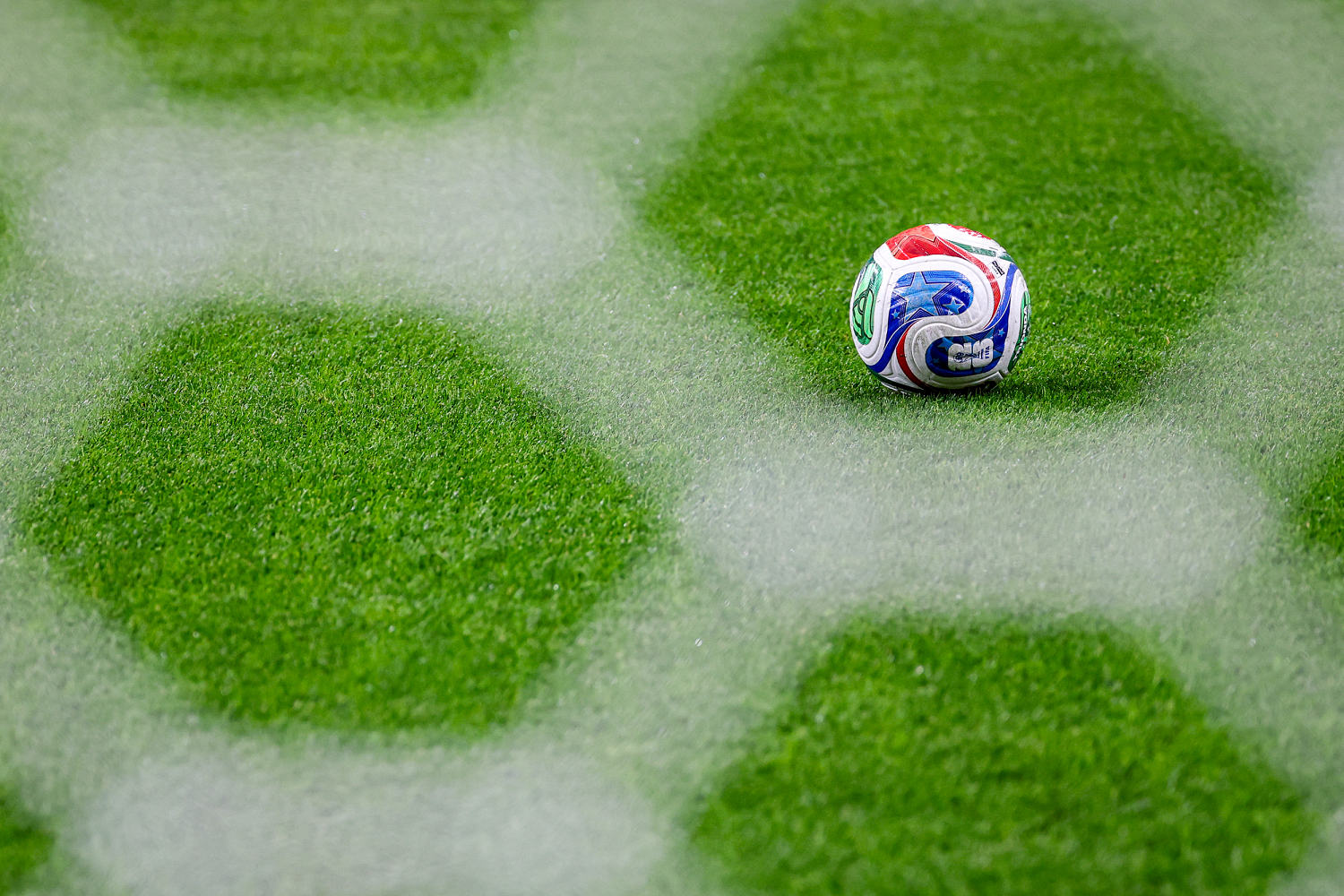
This year’s ball, the Trionda, differs from its predecessors in the number of panels (four) holding it together as well as its embedded microchip that allows it to transmit data.
But researchers say this ball doesn’t travel significantly differently from past World Cup balls or other balls used in professional leagues.
John Eric Goff, a professor at Purdue University’s sports engineering center, has tested World Cup balls since 2010, when the Jabulani ball from South Africa’s World Cup became notorious for moving in unexpected ways. According to Goff, the Trionda is balanced and has similar aerodynamics to the ball used in England’s Premier League.
These balls are also more homogeneous than those in decades past, which were hand-stitched or used a variety of natural materials, said Andy Harland, a professor of sports technology at Loughborough University in the U.K. and consultant for brands and leagues making professional soccer balls.
Player perception of the ball can definitely influence a game, Harland said, as athletes rely on information like the ball’s color and sound to interpret spin and speed. But players adapt quickly and have experience using a different ball in every league and tournament.
“It’s an easy target to blame the ball,” Goff said. “But I’m not hearing a lot of players specifically singling out the ball in the way that they did” in 2010].
Instead, experts point to the ways sports technology has evolved, allowing teams to play smarter on the field, and the increased investment in more rigorous athletic conditioning and better training facilities.
“The ball is such a high-profile feature of the game and certainly of tournaments; people haven’t necessarily factored in the quality of the pitch that’s changed as well and the quality of the [cleats],” Harland said.
Continental differences
All World Cup matches are played on grass that’s rolled out onto stadiums’ concrete floors, as opposed to the typical turf of an American football stadium. The quality of soccer fields has improved dramatically, Harland said, with players less likely to be in muddy conditions like they were in the 1970s. This creates more uniform play and more controlled conditions.
However, many of the North American host cities are experiencing hot weather, which can dry out the field. Other cities are dealing with high humidity, which can make it trickier for players to turn on a dime. Goff pointed to the U.S. vs. Turkey match in Los Angeles, in which viewers saw several players slip and fall.
Altitude can also make an impact on ball movement; cities at higher altitude have a lower air density, which can make the ball appear to move faster, Goff said. But there hasn’t been a demonstrated impact on goals scored in cities at higher elevation, such as Mexico City, compared to others at sea level like Seattle or Miami.
As matches enter the knockout round, viewers may expect to see the same number of high-scoring games. While a majority of goals were scored during the group stage in the previous nine tournaments, rates of scoring were also higher than average in later games.