






SEATTLE — The U.S. men’s soccer team entered the World Cup’s round of 16 looking as though it had an edge on the rest of the soccer world.
Subscribe to read this story ad-free
Get unlimited access to ad-free articles and exclusive content.

It ended Monday with another reminder it still is playing catch-up against the world’s elite teams.
For more than 24 hours before the U.S. kicked off against Belgium inside a sold-out Seattle Stadium, other nations had decried the appearance of an off-field advantage handed to the U.S. by FIFA’s independent disciplinary committee, when on Sunday it suspended U.S. goal-scorer’s Folarin Balogun’s one-game ban, making him eligible to play. The decision drew the team into a geopolitical storm after both FIFA president Gianni Infantino and President Trump acknowledged that Trump had called soccer’s global leader to inquire about the red card Balogun had been given July 1 against Bosnia and Herzegovina.
Yet once Monday’s game at last kicked off, all U.S. influence waned during a 4-1 loss. Balogun went from main character to non-factor as a World Cup run that was at times galvanizing and inspiring ended in a familiar place — short of true contention.
“Today, we were not the same team in the tournament that showed our quality,” coach Mauricio Pochettino said.

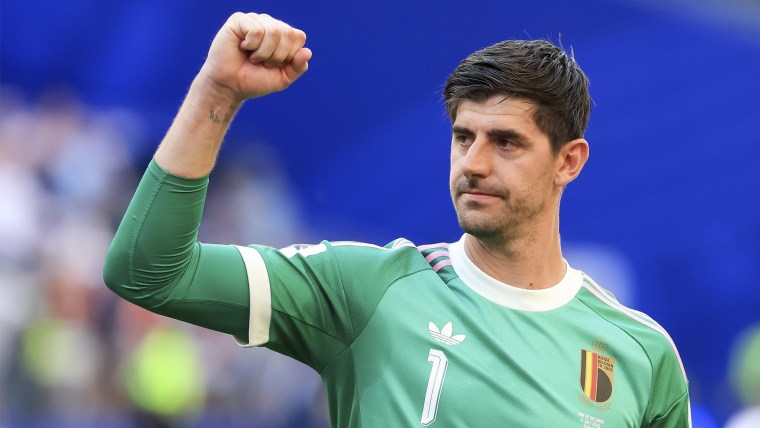
In Seattle, Belgium was technically sharper from the start, its passes crisper, its defense a wall where the U.S.’s was constantly undermined by its own mistakes. Belgium made the U.S. look more disheveled than it had at any point in the tournament, with multiple errors and questionable decisions leading to Belgian goals.
Why had the U.S. come out flat?
“It’s a great question,” defender Tyler Adams said. “Wish I had the answer right now.”
That quality the U.S. had showed in its first four matches prior to Monday seemed to be a step forward for the U.S. men’s national team, which has never advanced past the quarterfinals in modern history. The stylish play introduced by Pochettino, its Argentinian coach, led to more goals through the group stage alone than the U.S. had ever scored in a single World Cup, and anticipation grew that this could be the year the U.S. men became a factor.
Five days earlier, a record 36 million people tuned in to watch the team’s round-of-32 win over Bosnia-Herzegovina that was capped by scenes of Pochettino smiling as he sang “Country Roads,” the team’s adopted anthem, on the field after the U.S. had won its first knockout game at a World Cup since 2002.
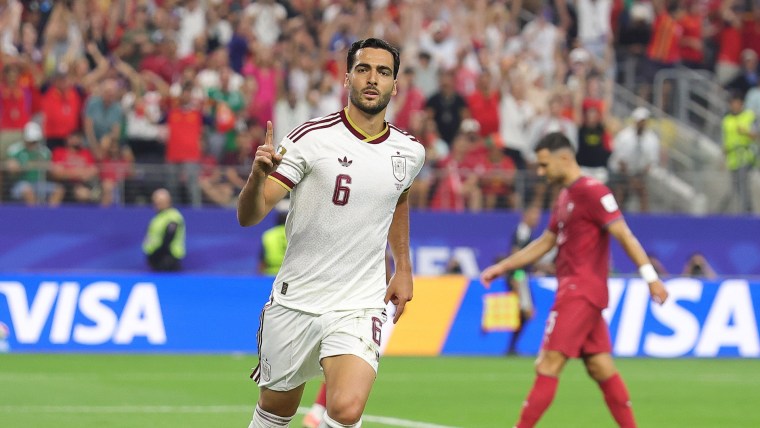
On Monday, the mood had turned. After the U.S. scored on a stirring free kick by Malik Tillman in the 31st minute, only to concede a goal within a minute to fall behind 2-1, Pochettino kicked a water-bottle carrier on the sideline in frustration and banged the top of the dugout with his fist. At the final whistle stars Christian Pulisic, who had twisted an ankle, and Balogun stayed in the dugout, pulling their jerseys over their mouths to rue a missed opportunity.

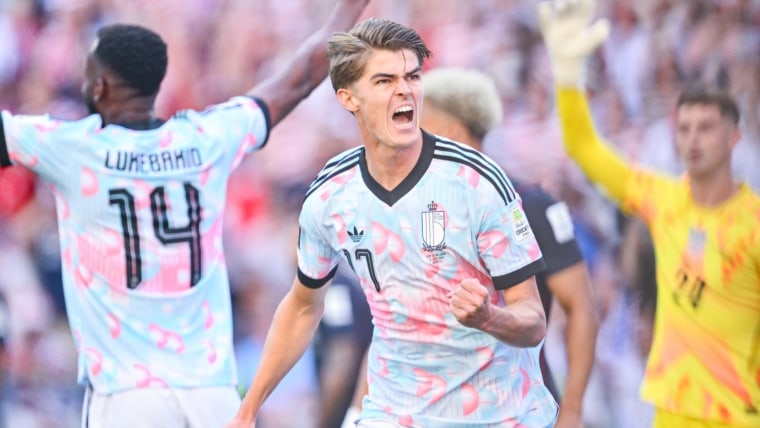
From Pochettino to his players, the U.S. was adamant that the storm around Balogun’s saga — with Belgium lodging a complaint that FIFA later dismissed, and multiple nations complaining of overreach — had not affected its focus or performance. Neither had it been a distraction for Belgium, forward Dodi Lukébakio said.
“At the end we are players, we have to answer on the pitch,” he said. “And that’s what we did today.”
Pochettino made the case that the tournament marked a sizable turnaround from one year earlier, when the national team was a self-described “mess” after the Gold Cup. He added that progress is not always linear.
“I am so proud because in one year … this team show that we can play football, we can play soccer, we can compete,” Pochettino said, before adding, “that we need to keep improving.”
What will sting the U.S. is that it may never have a better opportunity for its breakthrough.
As a co-host along with Mexico and Canada, the U.S. had a favorable draw that ensured it would never need to leave the Pacific time zone for its first six matches. In Los Angeles, Seattle and the Bay Area, the team played in front of rapturous, pro-U.S. crowds.
Players said they understood that they were playing not only for short-term victories, but to help foster long-term enthusiasm for soccer in a country that has not always received the sport warmly. Last week, U.S. player Gio Reyna acknowledged that “World Cups only come around every four years, especially on home soil; this opportunity will really never come back.”
“I think that was the goal, to obviously inspire people that the sport was growing in the U.S., which I think we saw,” Adams said. “The support was unbelievable. I think our initial reaction as a team was that in this moment we let them down. But I think altogether people gravitated towards the team because we were relatable, we represented exactly what the U.S. was today.”
Defender Tim Ream said he was not in a mood to analyze the game’s tactics Monday, but in the big-picture, said that it was important to wonder “how can we continue to inspire (youth players) now that the tournament is over?”
It isn’t the only question that faces the U.S. now that its tournament is over.
In recent years, U.S. Soccer has attracted more financial support, which has led to larger budgets and the resources capable of attracting a top coach like Pochettino. The billionaire Ken Griffin contributed a “significant part” of the funding for Pochettino’s deal, the federation has previously said. In the spring, U.S. Soccer opened its first dedicated training facility outside of Atlanta. And in June, the training center was the site of a summit of youth and national soccer officials from throughout the country as they set out to grapple with how to fix the flawed and fragmented talent-development pipeline in this country.
How the U.S. spends its next four years before the next World Cup building on that momentum could decide how they fare in 2030. Of the 26 players on the roster, 17 play for teams based in Europe, as the U.S. grows its representation within many of the leagues considered the world’s best. The average age of the Monday’s lineup was more than 27 years old. Whether the federation brings in younger blood, while retaining some veteran leadership, will be something Pochettino, or another coach, must balance.
U.S. Soccer has reportedly offered its coach a contract extension, but Pochettino comes from a background of coaching some of the biggest clubs in the world, and more could court him now. He was non-committal about his future Monday, but said he and the U.S. Soccer Federation had “built a very good relationship.”

“Now is a moment to see, to assess the tournament and for sure in the next weeks we can start to talk if the federation want to talk,” Pochettino said.
Throughout the tournament, players had described the stark difference in atmosphere compared to four years earlier, when the World Cup was played in Qatar, as far as could be away from American support. But the feeling after another knockout stage loss was no different, Adams said.
“This was this was a moment to have the opportunity to advance and really try and do something special,” he said. “We fell short.”